Fourche
Creek Information
Fourche Creek Information
Issues
The Fourche Creek Watershed has been subjected
to years of misuse and inadequate attention. This neglect
has put the wellbeing of the watershed at serious risk. The
greatest threats to the Fourche Watershed include:
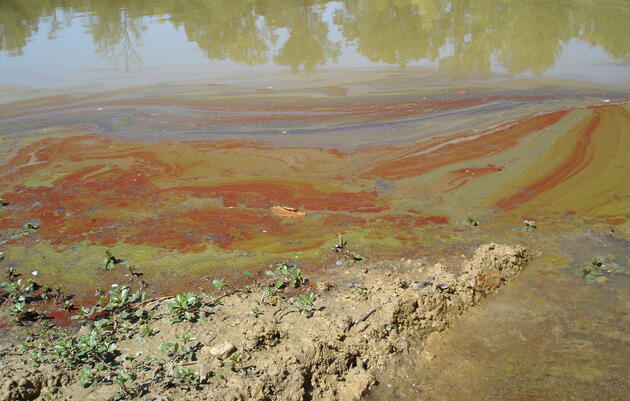
Non-point Source Pollution
Nonpoint source pollution deposits both natural and human-made
pollutants into Fourche Creek with every rainfall, including
oil and gas from nearby parking lots and streets; fertilizers,
pesticides, and herbicides from lawns and fields; air pollutants
from car emissions captured in rainfall; and effluent from
gravel mines. It also sweeps in a large amount of sediment,
blocking the natural filtration system in the wetlands and
disturbing the habitat of the wildlife that lives there.
Increased
Impervious Surfaces
Impervious surfaces increase the velocity and volume of stormwater
runoff into the watershed. This results in flooding and a
dramatic increase in erosion, such as that in the photo on
the left. Further, impervious surfaces prevent water from
filtering through the ground to aquifers, the source of drinking
water for many municipalities in the Central Arkansas area.
Development and Urban Sprawl
Little Rock has been rapidly developing over the past 20 years
at a rate considerably faster than that of the city’s
population growth. The resulting urban sprawl has been linked
with an increase in impervious surfaces and non-point pollution.
Landfills
The Fourche Creek watershed contains several city landfills.
Landfills closest to Fourche Creek include the BFI landfill
and the former landfill at Interstate Park. Despite the conversion
of an old landfill into what is now Interstate Park, trash
continues to migrate upward through the thin ground covering
and enter the creek. In addition, various chemicals resulting
from trash decomposition also end up in the creek.
Inappropriate
Trash Disposal
Whether it’s thrown from a car window, disposed of in
a storm drain, or simply dropped on the ground, nearly all
litter eventually finds its way into the waters of Fourche
Creek. Trash is a particularly troublesome form of pollution
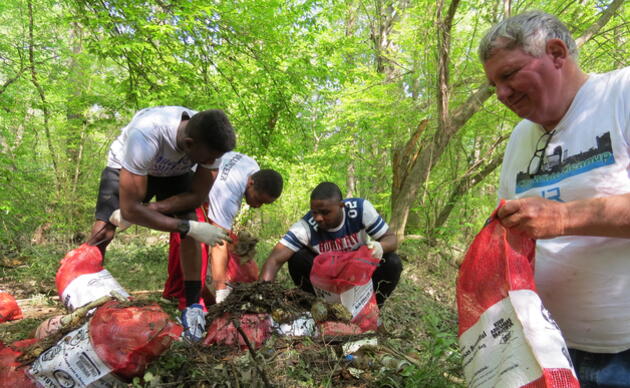
because it is quite persistent. There are continuing efforts
to clean up the trash that has been disposed in Fourche Creek,
with upwards of 6 tons having been removed by Audubon Arkansas
and volunteers already. The inappropriate disposal of trash
not only endangers the waters of the creek, but the life inhabiting
it and the city’s water supply.
A
Lack of Understanding and Education Concerning Water Resources
Without the public having an understanding of the value and
functions of watersheds and other water resources, people
are more likely to do unintentional damage to their water
supply. With increased education, the public will be capable
of making smarter watershed-conservation choices.
|